Author: workhouse123
-
COMPONENTS OF BUILDING
Modular Co-ordination For prefab construction and for the precast elements, modular co-ordination has to be followed. In this case, some basic module has to be adopted for general application to buildings and their components. The value of the basic module chosen is 100 mm for maximum flexibility and convenience. The symbol used for the basic…
-
ADVANTAGES AND DISADVANTAGES OF PRECAST CONCRETE
Advantages Precast concrete has several advantages over cast-in-situ concrete: Disadvantages There are certain aspects that discourage the use of precast concrete units under the following conditions:
-
PREFABRICATION IN CONSTRUCTION
Prefabrication is most suitable for large-scale housing programmes. Prefabrication technique is used as a cost-effective measure. As the components of any structure can be manufactured under controlled conditions, there is vast improvement in quality. It helps to use the locally available materials with required characteristics. The speed of construction is generally fast compared to cast-in-situ…
-
INTRODUCTION
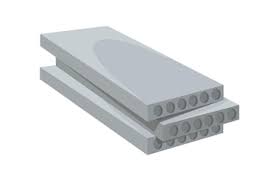
The term cast-in-situ concrete is applied to concrete members which are cast or poured in forms that are set up at the final position of the structure. In contrast, the term precast concrete is applied to individual concrete members of various shapes, which are designed to fit in a part of a whole structure, which…
-

LIME CONCRETE
Ingredients of Lime Concrete Lime concrete is made of lime, fine aggregate and coarse aggregate and mixed in suitable proportions in addition to water. Hydraulic lime is generally used as a binding material, sand, surkhi and cinder are used as fine aggregates, and broken bricks or broken stones are used as coarse aggregates. 8.14.2 Properties of Lime…
-
NON-DESTRUCTIVE TESTING
Non-destructive testing is done on hardened concrete. In non-destructive testing methods, some properties of concrete are used to estimate strength, durability, elastic parameters, crack depth, micro-cracks and progressive deterioration of concrete. Such properties of concrete are hardness, resistance to penetration of projectiles, rebound number, resonant frequency, ability to allow ultrasonic pulse velocity, ability to scatter…
-
QUALITY CONTROL OF CONCRETE
Quality control implies that the assigned work is done according to the specifications agreed in the contract. Major civil engineering works such as multistoreyed buildings, dams, harbours, etc., have to be constructed with utmost care as they have to last and be used for decades. Specifications of work should be framed based on cost or…
-
CRACKS IN CONCRETE
Factors that contribute to the formation of cracks in cement concrete are discussed below. 8.11.1 Plastic Shrinkage Cracks Evaporation of water from fresh concrete is due to the absorption by formwork and during the hydration process. The surface of concrete dries up when the loss of water from the surface of the concrete is faster…
-
TESTING OF FRESH AND HARDENED CONCRETE
Testing of fresh and hardened concrete is important in concrete construction. Tests are conducted on fresh concrete to check the workability of concrete, and on hardened concrete to determine the strength, creep effects, durability, etc. 8.10.1 Testing of Fresh Concrete The following tests are commonly employed to measure workability of fresh concrete: 1. Slump Test…
-
FINISHING
Finishing is the last stage in concrete construction. After casting of a concrete, the concrete does not offer a pleasant architectural appearance. In some cases like beams, finishing may not be needed. For a residential building, airport or road pavement and culvert and bridges, finishing is a must. Now-a-days, the centering materials are so made…