Category: Measurement of Mechanical
-
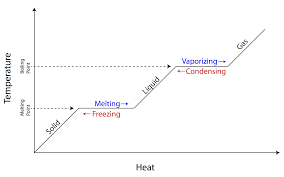
Change-of-state Temperature Measurement Devices
Change-of-state temperature sensors consist of labels, pellets, crayons, lacquers, or liquid crystals whose appearance changes once a certain temperature is reached. They are used, for instance, with steam traps—when a trap exceeds a certain temperature, a white dot on a sensor label attached to the trap will turn black. Response time typically takes minutes, so…
-

Fluid-expansion Temperature Measurement Devices
Fluid-expansion devices can be divided into two main classes: the mercury type and the organic-liquid type. Versions employing gas instead of liquid are also available. Mercury is considered an environmental hazard, so there are regulations governing the shipment of devices. Fluid-expansion sensors do not require electric power, do not pose explosion hazards, and are stable even…
-
Bimetallic Temperature Measurement Devices
Bimetallic devices work on the principle that different materials have different rates of thermal expansion. Strips of two metals are bonded together. When heated, one side will expand more than the other, and the resulting bending is translated into a temperature reading by mechanical linkage to a pointer. These devices are portable and they do…
-
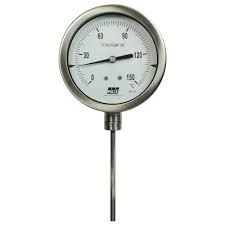
Bimetallic Temperature Measurement Devices
Bimetallic devices work on the principle that different materials have different rates of thermal expansion. Strips of two metals are bonded together. When heated, one side will expand more than the other, and the resulting bending is translated into a temperature reading by mechanical linkage to a pointer. These devices are portable and they do…
-
Infrared Temperature Measurement Devices
Infrared sensors are non-contacting devices. They infer temperature by measuring the thermal radiation emitted by a material.
-
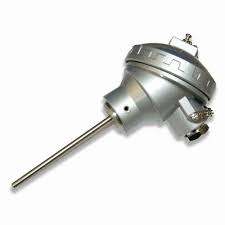
Resistance Temperature Devices (RTD)
Resistive temperature devices work on the principle that the electrical resistance of a material changes with its temperature. There are two key types of the devices: RTD and thermistors. It is well known that resistance of metallic conductors increases with temperature, while that of semiconductors generally decreases with temperature. Resistance thermometers employing metallic conductors for…
-
TEMPERATURE MEASUREMENT
When two conductors made from dissimilar metals are connected forming two common junctions and the two junctions are exposed to two different temperatures, a net thermal emf (electromagnetic force) is produced, the actual value being dependent on the materials used and the temperature difference between hot and cold junctions. The thermoelectric emf generated, in fact…
-

INTRODUCTION
In order to produce components, manufacturer have to know whether the components meet the required dimensional and accuracy standards. Companies carrying out maintenance activities also need to know that the components they are working with, repairing or servicing are to the required size and accuracy. Measurement plays an important role in establishing these needs and…