Category: 3. Machine Learning
-

What Can You Do with Machine Learning?
As machine learning has been around for decades, there have been many uses for this powerful technology. It also helps that there are clear benefits, in terms of cost savings, revenue opportunities, and risk monitoring. To give a sense of the myriad applications, here’s a look at some examples: Figure 3-2 shows some of the applications for…
-
Feature Extraction
In Chapter 2, we looked at selecting the variables for a model. The process is often called feature extraction or feature engineering. An example of this would be a computer model that identifies a male or female from a photo. For humans, this is fairly easy and quick. It’s something that is intuitive. But if someone…
-
Correlation
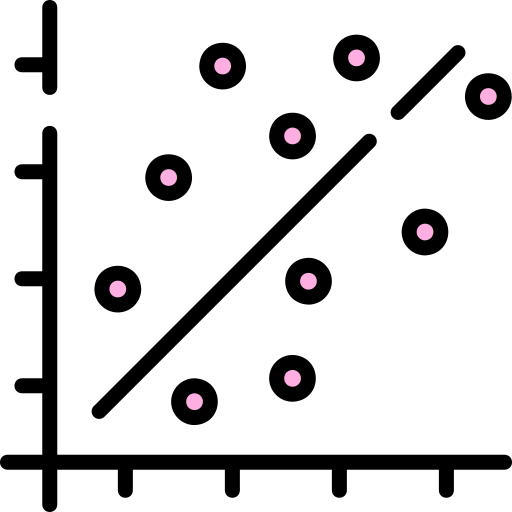
A machine learning algorithm often involves some type of correlation among the data. A quantitative way to describe this is to use the Pearson correlation, which shows the strength of the relationship between two variables that range from 1 to –1 (this is the coefficient). Here’s how it works: Then what is a strong correlation? As a general…
-
Bayes’ Theorem
As the name implies, descriptive statistics provides information about your data. We’ve already seen this with such things as averages and standard deviations. But of course, you can go well beyond this—basically, by using the Bayes’ theorem. This approach is common in analyzing medical diseases, in which cause and effect are key—say for FDA (Federal Drug Administration)…
-
The Normal Distribution
When plotted on a graph, the normal distribution looks like a bell (this is why another name for it is the “bell curve”). It represents the sum of probabilities for a variable. Interestingly enough, the normal curve is common in the natural world, as it reflects distributions of such things like height and weight. A…
-
Standard Deviation
The standard deviation measures the average distance from the mean. In fact, there is no need to learn how to calculate this (the process involves multiple steps) since Excel or other software can do this for you easily. To understand the standard deviation, let’s take an example of the home values in your neighborhood. Suppose…
-
What Is Machine Learning?
After stints at MIT and Bell Telephone Laboratories, Arthur L. Samuel joined IBM in 1949 at the Poughkeepsie Laboratory. His efforts helped boost the computing power of the company’s machines, such as with the development of the 701 (this was IBM’s first commercialized computer system). But he also programmed applications. And there was one that would make…