Category: Blog
-
Law of Thermodynamics
The first law of thermodynamics is equivalent to law of conservation of energy. It deals with the transformation of heat energy into work and vice versa. For closed systems, energy can be transferred by work and heat transfer. In thermodynamics, the term work denotes a means for transferring energy. Work done by a system is considered positive: W >…
-
Mechanical Equivalent of Heat
The mechanical equivalent of heat is a concept that has an important part in the development and acceptance of the conservation of energy and the establishment of the science of thermodynamics in the 19th century. The concept stated that motion and heat are mutually interchangeable and that in every case, a given amount of work would generate…
-
SPECIFIC HEAT CAPACITY
Specific Heat at Constant Volume (Cv) The rate of change of internal energy with respect to absolute temperature at constant volume is known as specific heat at constant volume (Cv). Enthalpy is sum of internal energy and product of pressure and volume, i.e., h = u + PV. But Q = ∂u + PdV = ∂u + ∂(PV) = ∂(u + PV) =…
-
IMPORTANT TERMINOLOGIES USED IN THERMODYNAMICS
Thermodynamics: It is the field of thermal engineering that studies the properties of systems that have a temperature and involve the laws that govern the conversion of energy from one form to another, the direction in which heat will flow, and the availability of energy to do work. Mass and Force: Mass is one of the fundamental…
-

INTRODUCTION
There are different forms of energy; all the energy cannot be used as a work. The convertibility of energy into work depends on its availability, i.e., how much energy can be converted into useful work. Thermodynamics is a branch of science and engineering that deals with interaction of energy mainly in the forms of heat…
-

What is Biotechnology?
Biotechnology is an amalgamation of biology and technology for our betterment and sustainable development. Modern biotechnology includes genetic engineering, bioinformatics and bioprocess engineering. Genetic engineering is used to alter the genetic composition of an organism. It is widely used to insert a gene of choice like pest-resistant or antibiotic-resistant genes, etc. to a host by…
-
-
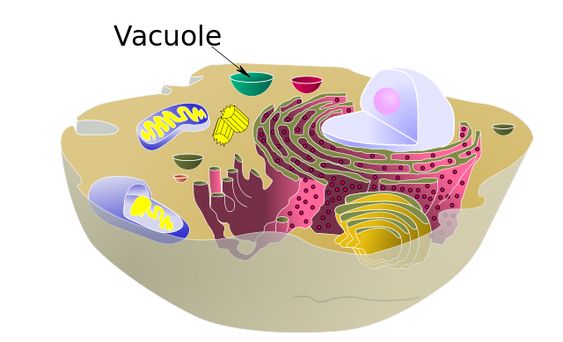
Vacuole Types
Gas vacuoles Central vacuoles Contractile vacuoles: Contractile vacuoles are the specialized vacuoles of protist cells. They are associated with the function of osmoregulation. They carry out the removal of excessive water from the protist’s body as they tend to take in a lot of water. This is carried out by the process of contraction and expulsion. There…
-
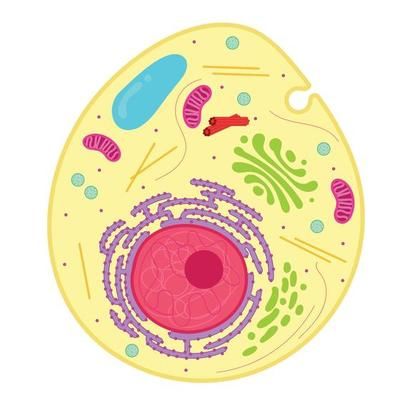
Functions of Ribosomes
Translation The ribosomes are described as the site of protein synthesis. Protein synthesis is the process of creating protein molecules. In biological systems, the major steps are amino acid synthesis, transcription, and translation. The ribosomes, though, are involved in the translation step. During translation, the amino acids are added by tRNAs and then are linked together in a specific…
-
Learning and Mastering Tax Preparer Tools:
Build a Strong Taxation Knowledge Base Engage in Hands-on Practice Participate in User Communities and Support Networks Utilize Official Training Resources Invest in Specialized Training and Certification Commit to Ongoing Learning Collaborate and Seek Constructive Feedback