The open-circuit characteristic of a DC shunt generator are shown in Figure 11.31. The line OX is drawn in such a way that its slope gives the field winding resistance,
i.e.,
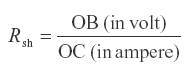
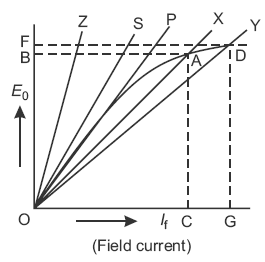
Fig. 11.31 Representation of critical resistance
In this case, the generator can build up a maximum voltage OB with a shunt field resistance Rsh. A line OY represents a small resistance. With this resistance, the generator can build up a maximum voltage OF that is slightly more than OB. If the field resistance is increased, the slope of the resistance line increases. Consequently, the maximum voltage that the generator can build up, at a specified speed, decreases. If the value of Rsh is increased to such an extent that the resistance line does not cut the no-load characteristics at all (OZ), then it is apparent that the voltage will not be built-up (i.e., the generator fails to excite).
If the resistance line (OP) just coincide with the slope of the curve, at this value of field resistance, the generator will just excite. This resistance given by the tangent to O.C.C. is called the critical resistance at a specified speed. Thus, the slope of the tangent drawn on O.C.C. is called critical resistance.
- Critical resistance of a field winding: It is that maximum value resistance of a field winding that is required to build-up voltage in a generator. If the value of field resistance is more than this value, the generator would not build-up the voltage.
- Critical load resistance: The minimum value of load resistance on a DC shunt generator with which it can be in position to build up is called its critical load resistance.
- Critical speed of a DC shunt generator: It is the speed of a DC shunt generator at which shunt field resistance will represent the critical field resistance.
11.13 CAUSES OF FAILURE TO BUILD-UP VOLTAGE IN A GENERATOR
There may be one or more of the following reasons due to which a generator fails to build-up voltage:
- When the residual magnetism in the field system is destroyed.
- When the connections of the field winding are reversed. This, in fact, destroys the residual magnetism due to which generator fails to build-up voltage.
- In the case of shunt-wound generators, the other causes may be
- the resistance of shunt field circuit may be more than the critical resistance.
- the resistance of load circuit may be less than critical resistance.
- the speed of rotation may be below the rated speed.
- In the case of series-wound generators, the other causes may be
Leave a Reply