
Aluminum has a relatively high coefficient of thermal expansion. The coefficient for glass is less than half as much. Because the cladding of a building is exposed to air temperature fluctuations as well as direct heating by the sun, it must be provided with expansion joints to allow thermal movement to occur without damaging the cladding or the frame of the building.
The differences in thermal movement between the glass and the aluminum are generally accommodated by very small sliding and flexing motions that occur between the glass and the gaskets in which it is mounted. Rubber blocks placed between the edge of the glass and the mullion on either side of each light prevent the glass from “walking” too far in either direction during repeated cycles of heating and cooling.
In the curtain wall systems illustrated in this chapter, vertical thermal movement in the aluminum is absorbed by telescoping joints that are provided at regular intervals in the vertical mullions (Figure 21.14). Horizontal thermal movement is accommodated by intentionally cutting horizontal aluminum components slightly short by a calculated fraction of an inch at each vertical mullion. Because the horizontal mullions are interrupted at each vertical mullion, there are many of these joints to work together in absorbing horizontal expansion and contraction.
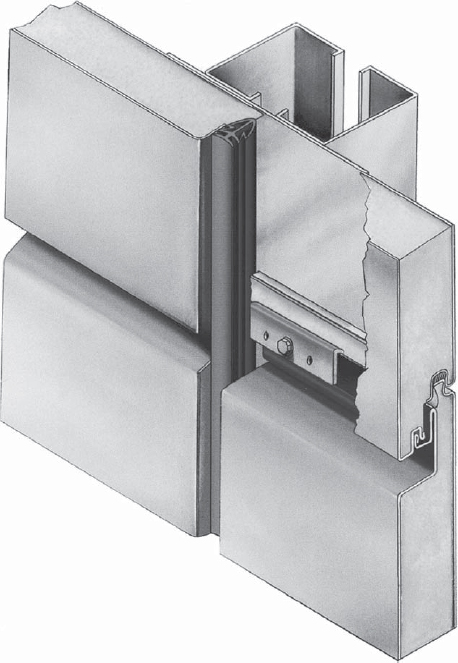
FIGURE 21.24 The CENTRIA Form-A-Wall® aluminum panel system for curtain walls is supported by vertical framing members behind the vertical joints between panels. Each panel is fastened to the frame with a screw at each top corner of the panel, seen here in the middle of the picture. The bottom edge of each panel is secured by an interlocking horizontal joint with the panel below. (Courtesy of CENTRIA)
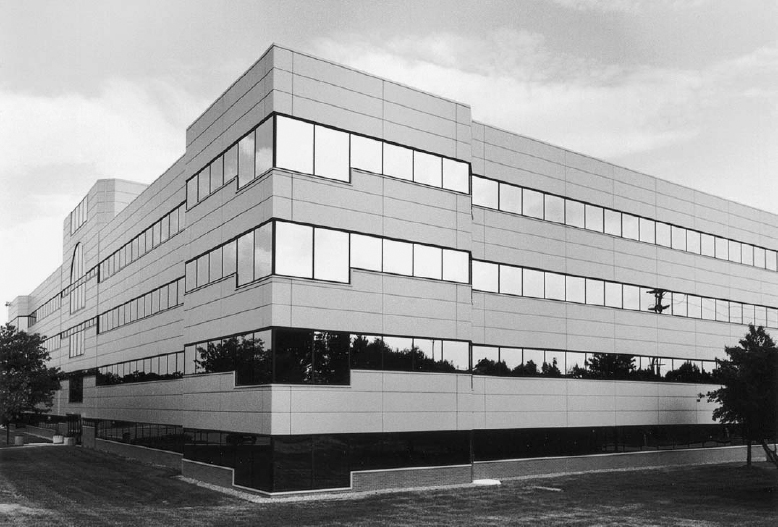
FIGURE 21.25 CENTRIA Form-A-Wall panels present a neat appearance that features the pattern of the open joints. Notice that special panels are used for corners; there is no seam at the corner itself. (Courtesy of CENTRIA)
Leave a Reply