Author: workhouse123
-
RELATION BETWEEN σ AND E
It has been already discussed that electric field is represented by electric lines of force. The strength of the electric field is different at different points and is called field strength or field intensity or electric intensity. The strength or intensity of an electric field at a point depends upon the concentration of electric lines…
-

ELECTRIC INTENSITY OR FIELD STRENGTH (E)
It has been already discussed that electric field is represented by electric lines of force. The strength of the electric field is different at different points and is called field strength or field intensity or electric intensity. The strength or intensity of an electric field at a point depends upon the concentration of electric lines…
-
ELECTRIC FLUX DENSITY (D)
The electric flux crossing per unit area at a given section in an electric field is known as electric flux density at that section. It is generally represented by letter σ (or D). Mathematically, Electric flux density where Ψ = electric flux in coulombs passing normally through an area A m2. The unit of electric flux density is coulomb per square metre…
-

ELECTRIC FLUX
It has already been seen that a positively charged body emanates electric lines of force, whereas these lines of force are terminated at the negatively charged body. The total electric lines of force emanated from a positive charge is called electric flux. Electric flux, in fact, is a measure of the overall size of electric…
-
ELECTRIC FIELD
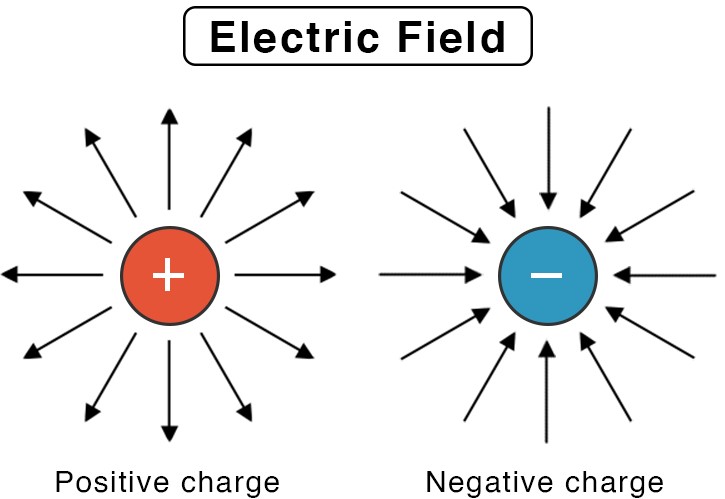
When a charged body is kept at some place, a region surrounding this body comes under stress and strain. According to Coulomb’s Law, if a charge (positive or negative) is brought into this stressed region, a force of repulsion or attraction is experienced by it. This stressed region around a charged body is called electric…
-

ABSOLUTE AND RELATIVE PERMITTIVITY
While discussing electrostatic phenomenon, a certain property of the medium called permittivity plays an important role. In fact, permittivity is the property of a medium that affects the magnitude of force exerted between two point charges. The greater the permittivity of a medium placed between the charged bodies, the lesser the force between them. The…
-
COULOMB’S LAWS OF ELECTROSTATICS
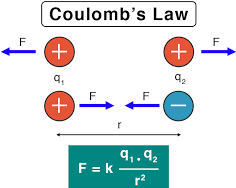
Charles Coulomb, a French scientist, performed a number of experiments to see the effect of placing small charges near each other. From his experimental observations, he drew some conclusions and summed them up into two laws, known as Coulomb’s Laws of Electrostatics: Fig. 3.1 Charges kept in a medium Mathematically, where Q1 and Q2 = strength of two point…
-

INTRODUCTION
The branch of engineering or science that deals with the static (i.e., stationary) charges is called electrostatics. When a glass rod is rubbed with a silk cloth, the former attains positive charge and the latter attains negative charge of equal magnitude. Since both the glass rod and the silk cloth are insulators, they retain these…
-
DELTA–STAR AND STAR–DELTA TRANSFORMATION
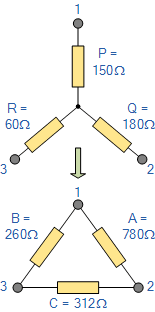
To apply simple series–parallel circuit technique for the solution of network, something is required to transform the resistors connected in delta to star or vice versa. At such places, just to simplify the network delta–star or star–delta transformations applied. 2.9.1 Delta–Star Transformation Consider a circuit shown in Figure 2.67(a), where three resistors RAB, RBC, and RCA are connected in delta. This…
-

NODAL ANALYSIS
In this method, one of the nodes is taken as the reference node and the other as independent nodes. The voltages at the different independent nodes are assumed and the equations are written for each node as per KCL. After solving these equations, the node voltages are determined. Then, the branch currents are determined. Consider…