Author: workhouse123
-

THE SEQUENCE OF INTERIOR FINISHING OPERATIONS
Interior finishing operations follow a carefully ordered sequence that varies somewhat from one building to another, depending on the specific requirements of each project. The first finish items to be installed are usually hanger wires for suspended ceilings, and full-height partitions and enclosures, especially those around mechanical and electrical shafts, elevator shafts, mechanical equipment rooms,…
-
INSTALLATION OF MECHANICAL AND ELECTRICAL SERVICES
When a building has been roofed and most of its exterior cladding has been installed, its interior is sufficiently protected from the weather that work can begin on the mechanical and electrical systems. The waste lines and water supply lines of the plumbing system are installed and, if specified, the pipes for an automatic sprinkler…
-
THE EXTERIOR WALL AND THE BUILDING CODES
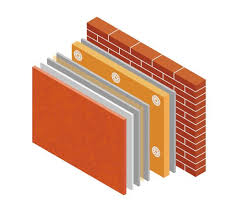
The major impact of building codes on the design of the exterior wall is in the areas of structural strength, fire resistance, and energy efficiency. Strength requirements relate to the strength and stiffness of the wall system itself and to the adequacy of its attachments to the building frame, with special reference to wind and…
-
CURTAIN WALL TESTING AND STANDARDS
Structural Performance and Resistance to Wind and Rain For any new curtain wall design, it is advisable to build and test a full-scale section of wall to determine its resistance to infiltration of air and water and its structural performance under heavy wind loadings. There are several outdoor laboratories in North America that are equipped…
-
BASIC CONCEPTS OF EXTERIOR WALL SYSTEMS
The Loadbearing Wall Until the late 19th century, nearly all large buildings were built with loadbearing exterior walls. These walls supported a substantial portion of the floor and roof loads of the building, as well as separating the indoor environment from the outdoors. In noncombustible buildings, these walls were built of brick or stone masonry.…
-
SEALANT JOINTS IN THE EXTERIOR WALL
Most exterior wall systems require sealant joints, seams that are closed with rubberlike compounds. Systems that do not use sealants as water barriers in the face of the wall frequently use them to seal joints in the air barrier behind the face. The role of a sealant is to fill the joints between wall components, preventing…
-
CONCEPTUAL APPROACHES TO WATERTIGHTNESS IN THE EXTERIOR WALL
n detailing the exterior wall for water resistance, we work from a secure theoretical base, which can be stated as follows: In order for water to penetrate a wall, three conditions must be satisfied simultaneously: 1. There must be water present at the outer face of the wall. 2. There must be an opening through…
-

DESIGN REQUIREMENTS FOR THE EXTERIOR WALL
Primary Functions of the Exterior Wall The major purpose of the exterior wall is to separate the indoor environment of a building from the outdoors in such a way that indoor environmental conditions can be maintained at levels suitable for the building’s intended use. This translates into a number of separate and diverse functional requirements.…
-
FLOORING THICKNESS
Thicknesses of floor finishes vary from ⅛ inch (3 mm) or less for resilient flooring to 3 inches (76 mm) or more for brick flooring. Frequently, several different types of flooring are used on different areas of the same floor level of a building. If the differences in thickness of the flooring materials are not…
-
TYPES OF FINISH FLOORING MATERIALS
Hard Flooring Materials Hard finish flooring materials (concrete, stone, brick, tile, and terrazzo) are often chosen for their resistance to wear and moisture. Being rigid and unyielding, they are not comfortable to stand on for extended periods of time, and they contribute to a live, noisy acoustic environment. Many of these materials, however, are so…